November! Its finally here and November means Iron Pour!
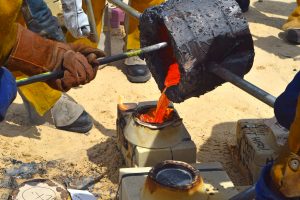
Shortly after becoming involved in sculpture, I was introduced to metal casting. Metal casting is traditionally done with bronze, but at seven dollars a pound, bronze is a pretty expensive material to learn with. Since iron only costs around twenty-five cents a pound, many schools substitute iron for bronze. However, over the years iron casting has become much more popular for more reasons than just being a cheap alternative to bronze. Iron casters around the globe would agree and have proven that iron and iron pours can be much more valuable in so many ways.
Because casting iron requires a group of people to work a long day, casters turn an iron pour into an event and invite other people to join — the more the merrier. Iron Pours have come to be a really fun social gathering for casters all around the world. Many artists even use the molten metal for performances because of the potential for spectacular reactions from the material. Again, the lower cost of the material makes it more available for experimentation.
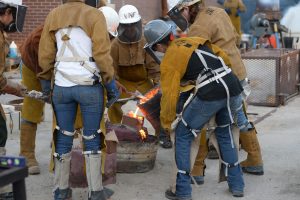
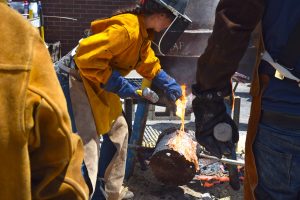
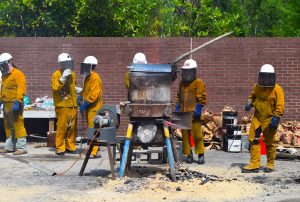
An iron pour usually lasts all day, and it requires hard work from a lot of people. The furnace takes a couple hours to prepare and to reach the right temperature; then it takes a few more hours to pour all the molds. If a performance is happening, many people will need to operate the furnace, and others will need to be available for the performance aspects. Afterwards, of course, it takes time to shut down the furnace and clean up the pour floor.
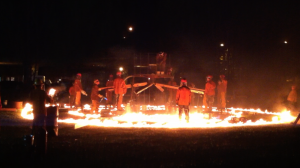
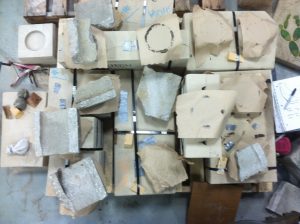
To melt iron, casters use a Cupolette furnace (a type of blast furnace) that is filled with coke (refined coal) and broken up pieces of iron. Discarded bathtubs and radiators are broken up into the appropriate size to fit the furnace. Iron has to get to a temperature of 2800 before it can be poured into the molds. When all the molds are safely poured and everyone has their pieces for their sculptures, it’s a great cause for celebration afterwards!
I’m looking forward to the iron pour this November at UNF for two main reasons. The biggest is to see friends and be working and involved with the community that I love. The other main reason is of course to come home with iron castings for some new sculptures that I’m working on!
Stay tuned for the next article that will have more in-depth information about iron pours. Also, don’t forget to check out my YouTube channel in a couple days for videos of the pour!
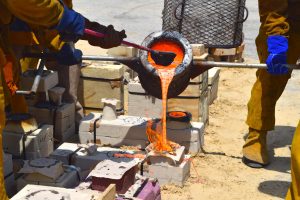
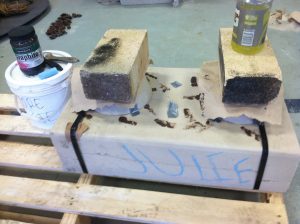
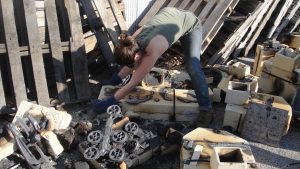
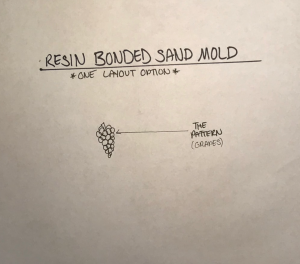
New on my YouTube page is a video that will quickly show you how a resin bonded sand mold for iron casting is laid out. In the video I use a cluster of fake grapes as an example of an item that you can cast.
dad says:
Very informative. I like it.
doing good!